
Overview
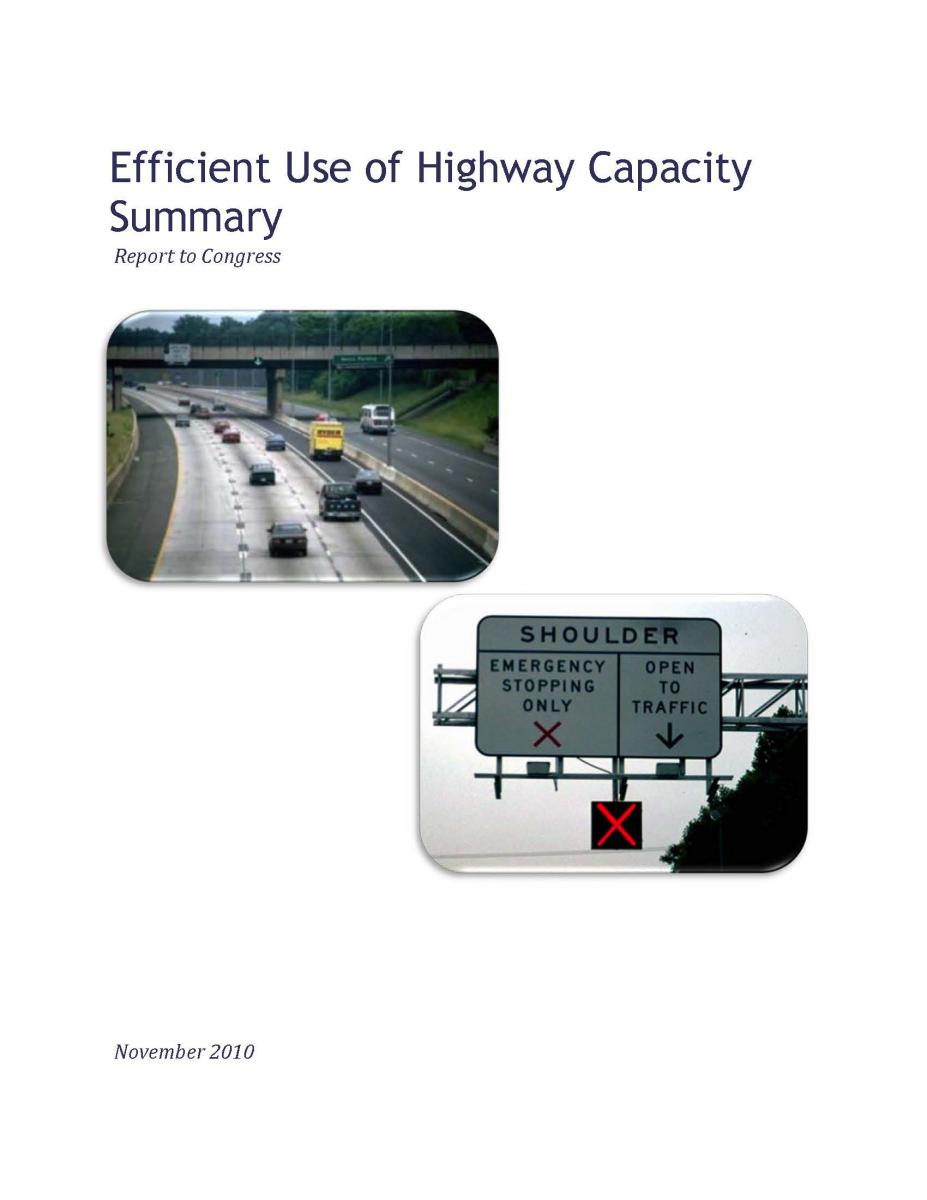 This report was developed to summarize the implementation of safety shoulders as travel lanes as a method to increase the efficient use of highway capacity. Its purpose is to provide a succinct overview of efforts to use left or right shoulder lanes as temporary or interim travel lanes. As part of this summary, information related to the impact of that shoulder usage on highway safety and/or accidents during operations was reviewed as well. The intent of the report is to provide critical information that the Federal Highway Administration (FHWA) can use to formulate guidance for agencies on providing temporary shoulder use as a means of increasing roadway capacity. The study that generated this product was conducted at the request of Congress through the 2008 Technical Corrections Act. Those issues that need to be considered include design, traffic control devices, performance measures, potential safety benefits, maintenance concerns, enforcement roles and processes, incident response, training for personnel, costs, liability and legal issues, and public outreach and education. Careful consideration of these issues can help ensure a shoulder use deployment is effective without having negative impacts on safety and operations.